How Does Rippling Onboarding Create a Better Employee Experience From Day One?

Most organizations think onboarding starts on an employee's first day.
In reality, onboarding starts much earlier.
It begins when offer letters are signed, payroll information is collected, managers prepare for a new hire, and employees start forming their first impressions of the organization.
The challenge is that many onboarding processes are still fragmented.
HR collects paperwork. Payroll gathers tax forms. IT provisions accounts. Managers coordinate training. Employees receive information from multiple places, often with inconsistent communication.
The result is an onboarding experience that feels disconnected for everyone involved.
This is where Rippling onboarding becomes valuable.
Rather than treating onboarding as a series of separate tasks, Rippling helps organizations create a more structured employee lifecycle process that connects workforce operations, payroll, compliance, and employee experience from the very beginning.
For growing organizations, onboarding often becomes one of the most important opportunities to establish operational consistency and employee engagement.
What Is Rippling Onboarding?
Rippling onboarding is the process of bringing new employees into the organization using Rippling's workforce platform.
The onboarding experience can include:
- Employee information collection
- Tax documentation
- Payroll enrollment
- Benefits setup
- Policy acknowledgments
- Training assignments
- Device provisioning
- Application access
- Manager workflows
Because onboarding occurs within the same platform used for workforce management, employee information only needs to be collected once and can then support multiple operational processes.
This helps reduce administrative burden while creating a more consistent experience for employees.
Why Onboarding Matters More Than Most Organizations Realize
Onboarding affects much more than paperwork.
A successful onboarding experience influences:
- Employee engagement
- Productivity
- Retention
- Manager effectiveness
- Workforce readiness
The first few weeks often determine how quickly employees become productive and how connected they feel to the organization.
When onboarding is inconsistent, employees frequently experience:
- Unclear expectations
- Delayed access
- Payroll confusion
- Missing information
- Communication gaps
These issues may seem minor individually, but collectively they create unnecessary friction during one of the most important stages of the employee lifecycle.
Organizations that invest in onboarding often see benefits long after the employee's first day.
How Does Rippling Onboarding Work?
Rippling onboarding allows organizations to centralize many of the tasks traditionally managed across multiple systems.
New hires can complete:
- Employee profiles
- Tax forms
- Direct deposit information
- Payroll documentation
- Policy acknowledgments
through a unified onboarding experience.
Organizations can also standardize onboarding workflows across departments and employee types.
This creates greater consistency while reducing the amount of manual coordination required between HR, payroll, managers, and IT.
One of the recurring themes that emerges during Rippling implementations is that onboarding works best when it is viewed as a workforce process rather than an HR process alone.
Why Payroll Setup During Onboarding Is So Important
One of the most common onboarding frustrations involves payroll.
Employees expect:
- Accurate pay
- Timely pay
- Clear payroll communication
When payroll information is incomplete or delayed during onboarding, employee trust can be affected almost immediately.
Rippling onboarding helps connect employee setup directly to payroll processes by collecting payroll-related information early in the onboarding experience.
This helps organizations establish:
- Tax withholding information
- Direct deposit setup
- Compensation records
- Payroll enrollment
before payroll processing begins.
The smoother payroll onboarding becomes, the smoother the employee experience often becomes as well.
How Does Rippling Onboarding Improve Operational Consistency?
As organizations grow, onboarding often becomes increasingly inconsistent.
Different departments may:
- Communicate differently
- Follow different processes
- Assign different responsibilities
This creates variability in the employee experience.
Rippling onboarding helps standardize onboarding workflows so employees receive a more consistent experience regardless of department or manager.
This consistency can improve:
- Workforce readiness
- Manager accountability
- Employee confidence
- Operational efficiency
Organizations that scale successfully often focus heavily on creating repeatable onboarding processes.
Why Managers Play a Critical Role in Onboarding
Technology alone does not create a great onboarding experience.
Managers remain one of the most important factors.
Employees often look to managers for:
- Role clarity
- Performance expectations
- Team integration
- Development opportunities
A strong onboarding process supports managers by creating structure around the employee's first weeks and months.
This helps reduce confusion while creating a more intentional employee experience.
Organizations frequently underestimate how much onboarding success depends on manager participation.
The best onboarding programs combine technology, process, and leadership involvement.
What Should Be Included in an Onboarding Checklist?
One of the most effective ways to improve onboarding consistency is through standardized checklists.
While every organization is different, most onboarding programs should include:
Before Day One
- Confirm employee information
- Collect tax forms
- Set up payroll records
- Assign manager responsibilities
- Prepare equipment and access
First Day
- Complete orientation
- Review policies
- Confirm payroll setup
- Introduce team members
- Review role expectations
First Week
- Complete training assignments
- Review organizational goals
- Schedule manager check-ins
- Verify system access
- Address onboarding questions
First 30 Days
- Conduct onboarding review
- Gather employee feedback
- Evaluate progress
- Confirm role understanding
- Establish development goals
Many organizations benefit from documenting these processes formally to improve consistency as hiring volume increases.
Frequently Asked Questions
What is Rippling onboarding?
Rippling onboarding helps organizations manage employee setup, payroll enrollment, workforce documentation, training, and onboarding workflows within a centralized platform.
Can Rippling collect employee tax forms during onboarding?
Yes. Rippling can help organizations collect payroll and tax-related information as part of the onboarding process.
Why is onboarding important?
Onboarding affects employee engagement, productivity, retention, workforce readiness, and overall employee experience.
What should be included in an onboarding checklist?
Most onboarding checklists include payroll setup, tax documentation, policy acknowledgments, manager introductions, training assignments, system access, and employee development planning.
Final Thought: Great Onboarding Is Really the Beginning of the Employee Lifecycle
Organizations often view onboarding as an administrative process.
The strongest organizations view it differently.
They view onboarding as the foundation of the employee lifecycle.
The first experiences employees have with payroll, managers, systems, communication, and company culture often shape everything that follows.
Rippling onboarding helps organizations create more structured, consistent, and scalable onboarding experiences that support both employee success and operational efficiency.
That investment pays dividends long after the first day is over.
That same attention to structure matters on the other end of the employee lifecycle, where a well-planned offboarding process protects the organization when employees eventually leave.
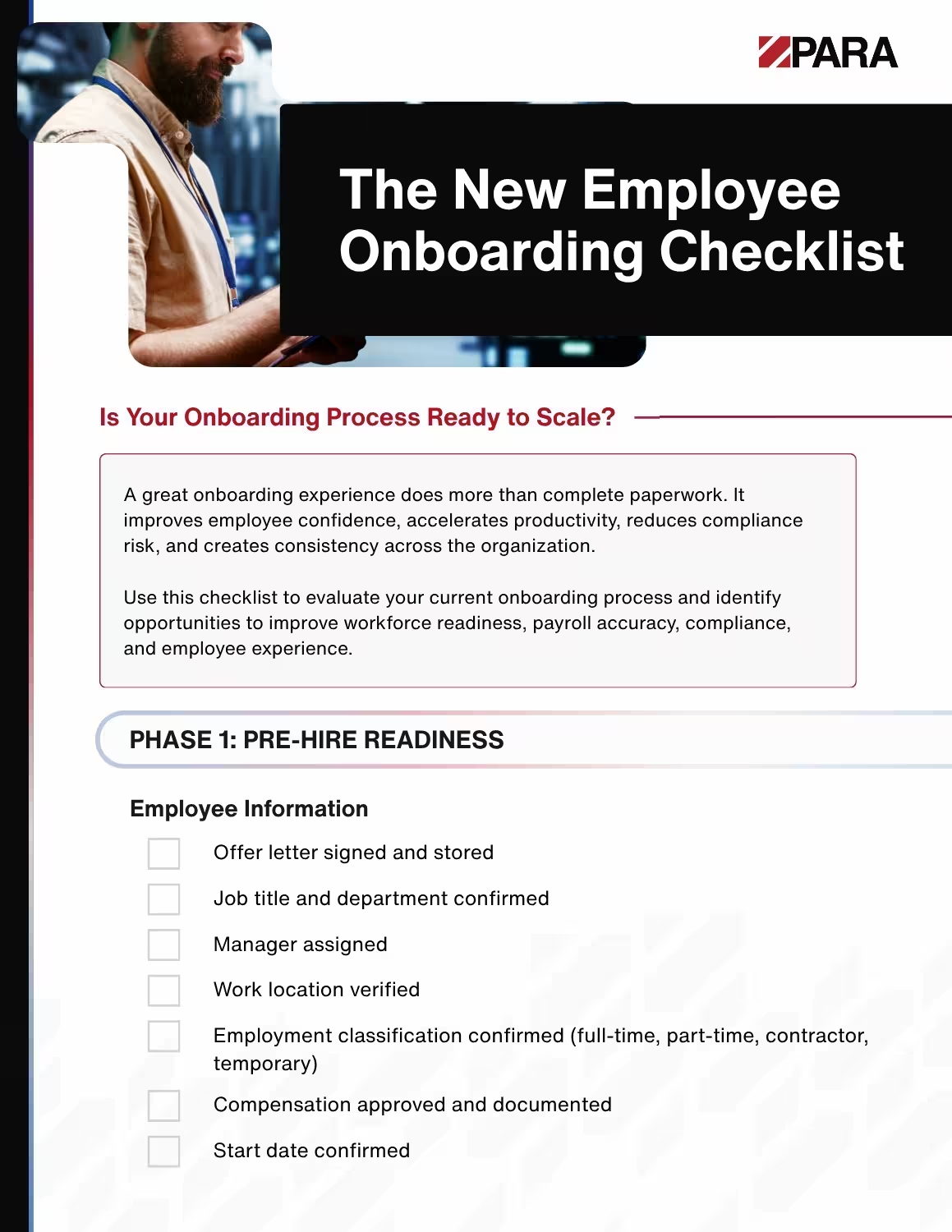
Download the New Employee Onboarding Checklist
Want to evaluate whether your onboarding process is truly ready to scale?
Our New Employee Onboarding Checklist helps organizations review the critical steps that support payroll readiness, workforce compliance, manager accountability, employee experience, and operational consistency.
Use it to identify onboarding gaps, standardize processes, and create a smoother experience for new hires before your next hiring cycle.
Build an Onboarding Process That Scales With Growth
As organizations grow, onboarding becomes more complex across payroll, compliance, workforce management, and employee experience.
PARA helps organizations design Rippling onboarding programs that improve consistency, employee readiness, payroll accuracy, and workforce operations. From implementation planning to onboarding architecture and lifecycle strategy, we help teams build onboarding processes that scale alongside the business.
Frequently Asked Questions
Frequently Asked Questions