How Does Rippling Offboarding Protect Your Organization When Employees Leave?
Most organizations spend significant time thinking about onboarding.
Far fewer spend the same amount of time thinking about offboarding.
Yet employee departures create many of the same operational challenges.
Payroll must be updated. System access must be removed. Equipment must be recovered. Compliance requirements must be met. Managers must communicate with teams. Documentation must be completed.
When these processes are handled inconsistently, organizations create unnecessary operational, security, and compliance risk.
This is where Rippling offboarding becomes valuable.
Rather than treating employee departures as isolated administrative tasks, Rippling helps organizations manage offboarding as a structured employee lifecycle process that connects HR, payroll, compliance, IT, and workforce operations.
For growing organizations, a consistent offboarding process is often just as important as a consistent onboarding process.
What Is Rippling Offboarding?
Rippling offboarding is the process of managing employee departures through the Rippling platform.
The offboarding process can include:
- Employee termination workflows
- Payroll updates
- Benefits administration
- Equipment recovery
- Application access removal
- Compliance documentation
- Manager notifications
- Workforce record updates
Because Rippling connects workforce operations within a shared platform, organizations can coordinate multiple offboarding activities from a centralized employee record.
This helps improve consistency while reducing the amount of manual coordination required across departments.
Why Offboarding Matters More Than Most Organizations Realize
Many organizations view offboarding primarily as an HR task.
In reality, offboarding affects:
- Payroll accuracy
- Workforce security
- Compliance readiness
- Operational continuity
- Employee experience
- Organizational risk
Even small mistakes can create significant challenges.
Examples include:
- Active accounts remaining enabled
- Incorrect final pay processing
- Missing equipment returns
- Incomplete documentation
- Delayed communication
The goal of offboarding is not simply to remove an employee from the system.
The goal is to ensure every operational responsibility associated with that employee is handled consistently.
How Does Rippling Offboarding Work?
Rippling offboarding helps organizations standardize employee departure processes.
Organizations can coordinate activities such as:
- Employee status changes
- Payroll updates
- Benefits transitions
- Access management
- Equipment tracking
- Workforce documentation
through a structured workflow.
One of the recurring themes that emerges during employee lifecycle management is that offboarding works best when responsibilities are clearly defined.
Without structure, tasks are often assumed rather than assigned.
That is when important steps begin to fall through the cracks.
Why Payroll Is One of the Most Important Offboarding Considerations
Employee departures often create payroll complexity.
Organizations may need to address:
- Final pay requirements
- PTO payouts
- Benefit deductions
- Compensation adjustments
- State-specific compliance requirements
Employees rarely remember whether access was removed on time.
They do remember payroll issues.
This is why payroll readiness should remain a central part of every offboarding process.
Rippling offboarding helps organizations maintain visibility into workforce and payroll transitions so employee departures are handled more consistently.
How Does Offboarding Improve Organizational Security?
One of the most overlooked aspects of offboarding is security.
Former employees may have access to:
- Email systems
- Communication tools
- Business applications
- Customer information
- Internal documentation
Without a structured offboarding process, access removal can become inconsistent.
This creates unnecessary risk.
A strong offboarding program ensures organizations review:
- User access
- Software permissions
- Device recovery
- Account ownership
- Security responsibilities
before employee departures are finalized.
As organizations grow, security becomes an increasingly important part of employee lifecycle management.
Why Managers Play a Critical Role in Offboarding
Just as managers influence onboarding success, they also influence offboarding success.
Managers often possess important context regarding:
- Employee responsibilities
- Ongoing projects
- Customer relationships
- Team communication
- Knowledge transfer
A structured offboarding process helps managers prepare for employee transitions while reducing operational disruption.
The strongest offboarding programs treat employee departures as business continuity events rather than administrative events.
How Does Rippling Offboarding Support Workforce Continuity?
Employee departures can impact:
- Team productivity
- Project timelines
- Customer relationships
- Organizational knowledge
A structured offboarding process helps organizations prepare for those transitions.
Examples include:
- Documenting responsibilities
- Transferring ownership
- Preserving institutional knowledge
- Communicating changes
- Preparing replacement hiring plans
Organizations that approach offboarding strategically often experience smoother workforce transitions and less operational disruption.
What Should Be Included in an Offboarding Checklist?
One of the easiest ways to improve offboarding consistency is through a standardized checklist.
While every organization has unique requirements, most offboarding programs should include:
Before the Employee's Last Day
- Confirm departure date
- Review payroll requirements
- Identify company property
- Document transition responsibilities
- Assign knowledge transfer activities
Final Day Activities
- Conduct exit meeting
- Review benefits information
- Confirm payroll expectations
- Collect company property
- Communicate departure internally
Access and Security Review
- Disable application access
- Remove email access
- Review shared account ownership
- Update permissions
- Verify device recovery
Workforce and Documentation Review
- Update employee records
- Complete compliance documentation
- Archive required records
- Review organizational updates
- Finalize transition plans
Organizations often discover process gaps only after employees leave. Documenting offboarding processes helps reduce those risks over time.
Frequently Asked Questions About Rippling Offboarding
What Is Rippling Offboarding?
Rippling offboarding helps organizations manage employee departures through structured workflows that support payroll updates, compliance activities, workforce records, access management, and operational transitions.
Why Is Offboarding Important?
Offboarding helps organizations reduce operational, security, compliance, and payroll risks while supporting smoother employee transitions.
What Should Be Included in an Offboarding Checklist?
Most offboarding checklists include payroll reviews, benefits administration, access removal, equipment recovery, compliance documentation, and knowledge transfer planning.
How Does Offboarding Support Security?
A structured offboarding process helps ensure organizations review application access, permissions, devices, and account ownership before employee departures are finalized.
Final Thought: Great Employee Lifecycle Management Includes Both Onboarding and Offboarding
Many organizations focus heavily on first impressions.
The strongest organizations also focus on last impressions.
Employee departures affect payroll, compliance, security, workforce planning, and business continuity.
Rippling offboarding helps organizations create more structured and consistent employee transitions that reduce risk while supporting operational continuity.
Just as onboarding establishes the beginning of the employee lifecycle, offboarding helps ensure the lifecycle concludes responsibly.
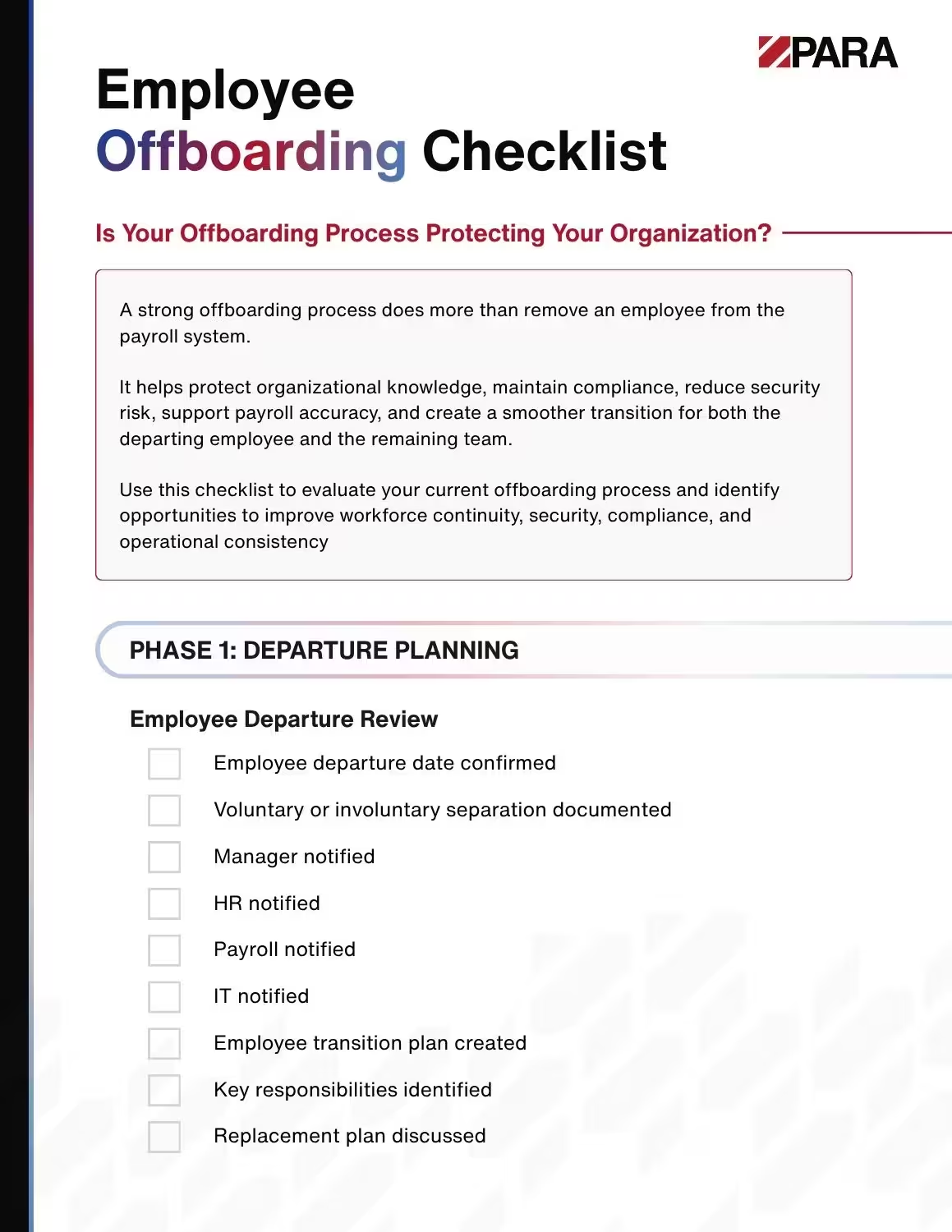
Download the Employee Offboarding Checklist
Want to evaluate whether your offboarding process is creating unnecessary operational or security risk?
Our Employee Offboarding Checklist helps organizations review payroll readiness, access management, compliance responsibilities, workforce transitions, and business continuity planning before an employee's departure.
Use it to identify gaps, improve consistency, and create a more reliable employee lifecycle process.
Download the checklist to assess your offboarding process and uncover opportunities for improvement.
Build an Offboarding Process That Protects Your Organization
As organizations grow, employee departures become more complex across payroll, compliance, security, workforce management, and operational continuity.
PARA helps organizations design Rippling offboarding programs that improve consistency, reduce risk, strengthen security, and support workforce transitions. From implementation planning to employee lifecycle strategy and process design, we help teams build offboarding processes that scale alongside the business.
Frequently Asked Questions
Frequently Asked Questions