How Does Rippling Automate the Employee Lifecycle From Hire to Departure?

Most organizations think about onboarding and offboarding as separate processes.
In reality, they are two parts of the same employee lifecycle.
An employee joins the organization, develops within their role, contributes to the business, and eventually transitions out. Throughout that journey, payroll, compliance, workforce operations, security, and employee experience all play a role.
The challenge is that many organizations manage these lifecycle stages independently.
Onboarding follows one process. Offboarding follows another. Documentation lives in different systems. Responsibilities are distributed across multiple departments.
The result is inconsistency.
This is where automating the employee lifecycle in Rippling becomes valuable.
Rather than treating onboarding and offboarding as isolated events, Rippling helps organizations create a connected lifecycle framework that supports employees from their first day through their final day.
For growing organizations, lifecycle automation improves consistency, reduces administrative burden, and helps ensure workforce processes scale alongside the business.
What Is Employee Lifecycle Automation?
Employee lifecycle automation is the process of using technology and structured workflows to manage employee transitions throughout their time with the organization.
This includes:
- Onboarding
- Payroll enrollment
- Workforce documentation
- Compliance requirements
- Employee development
- Role transitions
- Offboarding
- Workforce record management
The goal is not simply to automate tasks.
The goal is to create a consistent employee experience while reducing operational risk and administrative overhead.
When lifecycle processes are connected, organizations spend less time managing transitions manually and more time supporting employee success.
Why Employee Lifecycle Management Matters
Every employee transition creates operational responsibilities.
When employees join the organization, teams must coordinate:
- Payroll setup
- Tax documentation
- System access
- Training
- Compliance activities
When employees leave, organizations must coordinate:
- Payroll updates
- Benefits transitions
- Access removal
- Equipment recovery
- Workforce documentation
If those processes are inconsistent, organizations create unnecessary friction.
Lifecycle management helps ensure employee transitions are handled in a structured and repeatable manner.
This improves both employee experience and operational readiness.
How Does Rippling Support Employee Lifecycle Management?
Rippling supports employee lifecycle management by connecting workforce information, payroll, compliance activities, and operational workflows within a shared platform.
Because employee records remain centralized, organizations can manage multiple lifecycle stages from the same source of truth.
This creates greater consistency across:
- Workforce operations
- Payroll processes
- Compliance requirements
- Employee records
- Organizational reporting
Instead of treating employee transitions as disconnected events, organizations can create a more unified lifecycle strategy.
How Does Rippling Onboarding Support the Employee Lifecycle?
The employee lifecycle begins long before an employee's first day.
A successful onboarding experience establishes the foundation for everything that follows.
Organizations often use onboarding to support:
- Employee readiness
- Payroll enrollment
- Compliance documentation
- Training
- Workforce integration
The strongest onboarding programs create consistency across departments while helping employees become productive more quickly.
As explored in How Does Rippling Onboarding Create a Better Employee Experience From Day One?, onboarding affects far more than paperwork. It influences employee engagement, workforce readiness, operational efficiency, and long-term retention.
When onboarding is structured, organizations create stronger foundations for future employee success.
Why Consistency Matters Across the Employee Lifecycle
One of the biggest challenges growing organizations face is consistency.
Different managers may follow different onboarding approaches.
Departments may handle employee transitions differently.
Workforce processes may evolve without clear documentation.
Over time, these inconsistencies create operational risk.
Lifecycle automation helps organizations standardize:
- Employee communication
- Documentation requirements
- Payroll processes
- Compliance workflows
- Workforce transitions
The goal is not rigid control.
The goal is predictable execution.
Consistency improves both employee experience and organizational efficiency.
How Does Rippling Offboarding Support Workforce Continuity?
The employee lifecycle does not end when an employee leaves.
Organizations must still manage:
- Payroll obligations
- Compliance responsibilities
- Knowledge transfer
- Access management
- Business continuity planning
Many organizations underestimate the importance of offboarding until something goes wrong.
A former employee retains system access. Equipment is not returned. Critical knowledge is lost. Payroll issues create confusion.
As discussed in How Does Rippling Offboarding Protect Your Organization When Employees Leave?, a structured offboarding process helps organizations reduce risk while supporting workforce continuity and operational readiness.
The strongest lifecycle programs give as much attention to offboarding as they do onboarding.
Why Employee Lifecycle Automation Supports Growth
Growth introduces complexity.
Organizations add:
- Employees
- Departments
- Managers
- Locations
- Workforce processes
Without structure, employee transitions become increasingly difficult to manage consistently.
Lifecycle automation helps organizations create repeatable processes that scale more effectively.
Benefits often include:
- Improved employee experience
- Stronger compliance readiness
- Reduced administrative work
- Greater operational consistency
- Improved workforce visibility
The larger the organization becomes, the more valuable standardized lifecycle processes typically become.
Why Documentation and Checklists Matter
Technology helps automate employee lifecycle processes.
Documentation helps sustain them.
One of the recurring themes across successful implementations is the importance of standardized checklists.
Checklists help organizations ensure important steps are not overlooked during employee transitions.
Examples include:
- Onboarding checklists
- Payroll readiness reviews
- Manager responsibilities
- Compliance documentation
- Offboarding procedures
- Knowledge transfer activities
Organizations that document employee lifecycle processes often create more consistent outcomes than those relying solely on tribal knowledge.
Frequently Asked Questions About Automating the Employee Lifecycle in Rippling
What Is Employee Lifecycle Automation?
Employee lifecycle automation is the process of using structured workflows and technology to manage employee transitions from onboarding through offboarding.
Why Is Employee Lifecycle Management Important?
Employee lifecycle management helps organizations improve employee experience, workforce consistency, compliance readiness, operational efficiency, and business continuity.
How Does Rippling Support Onboarding and Offboarding?
Rippling helps organizations manage employee onboarding, payroll enrollment, workforce documentation, compliance activities, access management, and employee departures through connected workflows.
Why Do Organizations Use Onboarding and Offboarding Checklists?
Checklists help standardize employee transitions, reduce operational risk, improve compliance readiness, and ensure critical tasks are completed consistently.
Final Thought: Employee Lifecycle Management Is Really Workforce Management
Organizations often focus on individual employee events.
The strongest organizations focus on the entire employee journey.
Every onboarding experience influences future engagement.
Every offboarding experience affects operational continuity.
Every transition creates opportunities to improve consistency, reduce risk, and strengthen workforce operations.
Rippling helps organizations connect those transitions into a more unified employee lifecycle strategy.
That is what allows employee lifecycle management to become a scalable operational advantage rather than a collection of disconnected processes.
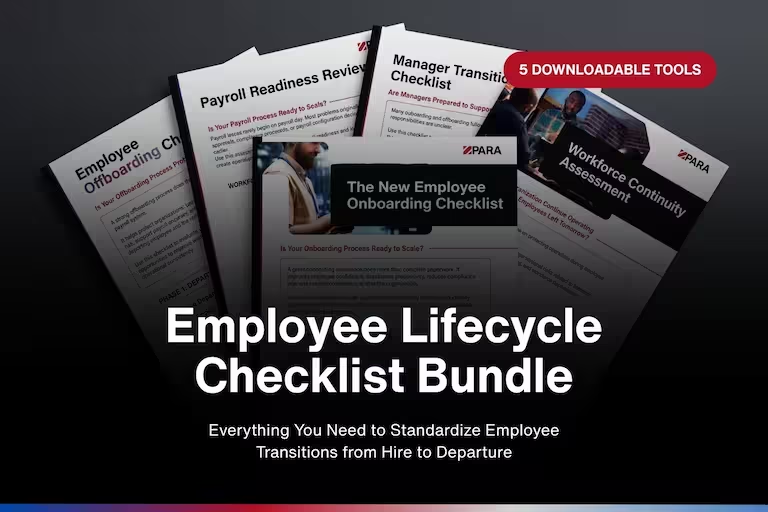
Download the Employee Lifecycle Checklist Bundle
Looking to evaluate both onboarding and offboarding processes?
Our Employee Lifecycle Checklist Bundle includes:
- New Employee Onboarding Checklist
- Employee Offboarding Checklist
- Payroll Readiness Review
- Manager Transition Checklist
- Workforce Continuity Assessment
Use these resources to identify lifecycle gaps, improve consistency, strengthen compliance readiness, and create a more scalable workforce operation.
Build an Employee Lifecycle Strategy That Scales
As organizations grow, employee transitions become more complex across payroll, compliance, workforce operations, security, and employee experience.
PARA helps organizations design Rippling employee lifecycle strategies that improve onboarding, offboarding, workforce consistency, operational readiness, and organizational scalability. From implementation planning to lifecycle process design and workforce governance, we help teams build employee lifecycle programs that support long-term growth.
Frequently Asked Questions
Frequently Asked Questions