
Is Rippling the Right Choice for Your Payroll Migration?
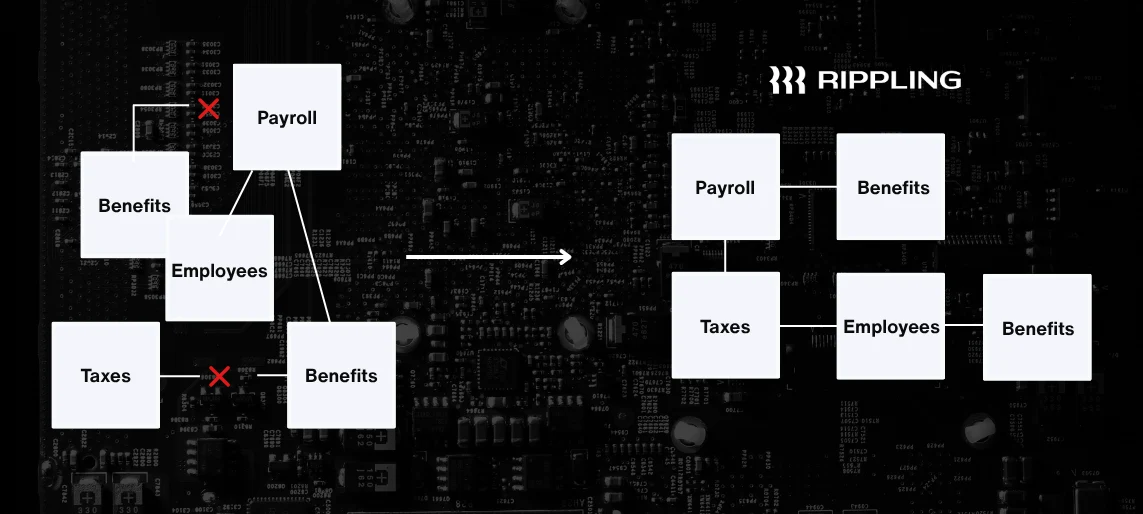
Switching payroll systems is one of those decisions that keeps HR and finance teams up at night. There’s data to move, timelines to hit, and a workforce counting on every paycheck landing accurately and on time. If you’ve been evaluating platforms and Rippling keeps coming up in the conversation, you’re probably asking the right questions. Let’s walk through what you actually need to know.
What Is a Payroll Migration?
A payroll migration is the process of transferring your payroll operations from one system to another. That sounds simple enough, but in practice, it involves moving employee records, historical pay data, tax filings, direct deposit information, benefit deductions, and compliance settings from your current platform into a new one, without missing a beat in between.
The stakes are high. A poorly executed migration can result in late or incorrect paychecks, tax filing errors, duplicate records, or gaps in compliance. That’s why most companies choose to work with an experienced implementation partner rather than going it alone. The goal isn’t just to flip a switch. It’s to make sure that on day one in the new system, everything works exactly as it should.
Timing matters too. Most organizations run a parallel payroll period, where both the old and new systems process payroll simultaneously, so any discrepancies can be caught before fully cutting over. Others use a hard cutover approach, which moves faster but leaves less room for error. The right approach depends on your company size, internal capacity, and how complex your payroll setup really is.
A successful migration starts long before employee data is imported. Clear implementation sequencing, ownership, and data preparation often determine whether the transition succeeds. We explore that process in What Does a Strong Rippling Implementation Strategy Actually Look Like?
Understanding Multistate Payroll
If your employees work across more than one state, you’re dealing with multistate payroll, and it adds a meaningful layer of complexity to any migration.
Each state has its own tax rates, filing requirements, withholding rules, and compliance deadlines. Some states require local tax withholding at the city or county level. Others have specific rules around how quickly you need to process final paychecks when an employee leaves. Remote work has made this even more nuanced. A company headquartered in Illinois with employees working from Texas, California, and New York isn’t just running one payroll. It’s effectively running several at once, each with its own regulatory environment.
When you’re migrating to a new platform, all of that needs to carry over correctly. Tax nexus configurations, state tax accounts, and jurisdiction-level rules have to be set up accurately in the new system before a single paycheck runs. Getting this wrong doesn’t just create administrative headaches. It creates tax liability.
This is one of the main reasons Rippling payroll migration projects benefit from working with a certified Rippling implementation partner. Getting the multistate configuration right from the start saves significant time and money down the road.
Organizations operating across multiple legal entities face an additional layer of complexity, where payroll structures, funding accounts, and tax registrations must remain separated while still supporting centralized reporting. Learn more in How Do You Structure Rippling Multi-Entity Payroll Across 100+ Entities?
How Rippling Handles Payroll
Yes, Rippling processes payroll, and it does so natively, meaning payroll isn’t bolted on from a third-party provider. It’s built directly into the platform alongside HR, IT, and finance.
Rippling’s administrative dashboard is designed to let you review hours worked, approve time off, preview deductions, and run payroll all from one screen. For companies that have historically juggled multiple disconnected systems, that kind of consolidation is a big deal. Once your workforce is set up, pay runs can be completed in 90 seconds, which tells you something about how automated the process really is.
The payroll module delivers automatic tax filing, payroll processing, and unlimited pay runs, but its real value comes from being able to automate tasks and unify data across the platform. Compensation changes, new hires, and terminations all flow directly into payroll without manual re-entry. Benefits deductions sync automatically. Time and attendance data connects directly to pay runs. For teams that have spent years reconciling data between separate HR and payroll tools, this is a meaningful shift in how they work.
Rippling was built to handle the complex, human-side decisions that come up in real payroll scenarios, like a clawback on a signing bonus or a one-off accommodation for a leave of absence, by building all of its systems on a data model that understands the relationships between people, roles, policies, and compliance.
Rippling also supports global payroll, contractor payments, and employer of record services across more than 185 countries, which matters for companies with international teams or plans to hire abroad.
If your migration also includes international employees or global expansion, payroll planning extends beyond state tax compliance into country-specific employment requirements. Learn more in Does Rippling Handle International Payroll?
Rippling’s Financial Standing
For any business considering a long-term platform investment, the financial health of the vendor matters. You want to know the company will be around, supported, and innovating for years to come.
Rippling’s trajectory on that front is hard to ignore. The company reached an estimated $570 million in annualized revenue in early 2025, up from around $350 million in 2023, with CEO Parker Conrad stating the annual growth rate is well over 30%. In May 2025, Rippling closed a $450 million Series G round, with agreements to repurchase up to $200 million in equity from current and former employees, valuing the company at $16.8 billion.
With that round, Rippling has raised a total of $1.85 billion, serves over 20,000 customers, and employs more than 4,000 people. Backers include Goldman Sachs, Baillie Gifford, Kleiner Perkins, Sequoia Capital, and Y Combinator, which is also a Rippling customer. The company is projected to reach $1 billion in revenue by 2026 and was named to CNBC’s Disruptor 50 list in June 2025.
For companies evaluating whether to build their HR and payroll infrastructure on Rippling, that financial picture reflects a platform with real momentum and the backing to support it long-term.
How to Plan a Successful Rippling Payroll Migration
Knowing the platform is capable is one thing. Getting the migration right is another.
The most successful Rippling payroll migrations share a few things in common. They start with a thorough audit of the current system, capturing all active employees, pay types, deductions, tax registrations, and historical data that needs to carry over. They set a realistic go-live date that accounts for parallel payroll runs and testing cycles. And they involve someone who has done it before.
Rippling’s implementation process is structured, but the complexity of your payroll setup determines how much configuration work is involved. Multistate tax accounts need to be registered and verified. Custom pay types and overtime rules need to be mapped. Integrations with accounting platforms like QuickBooks, Xero, or NetSuite need to be configured and tested before they go live.
Working with a certified Rippling partner means you have someone who understands the platform’s architecture, knows where the common sticking points are, and can help you make decisions that set the system up for long-term success rather than just getting you across the finish line.
A Rippling payroll migration done right isn’t just a system swap. It’s an opportunity to clean up years of workarounds, eliminate redundant tools, and build a payroll and HR foundation that actually scales with your business.
Plan Your Rippling Payroll Migration the Right Way
Switching payroll systems is not just a technical project. It is a system-level decision that impacts payroll accuracy, compliance, and how your teams operate day to day.
If you are preparing for a Rippling migration or want a second set of eyes on your current setup, PARA helps organizations audit their data, structure their payroll correctly, and ensure everything is configured to work from day one.