What Are the Phases of a NetSuite Implementation?
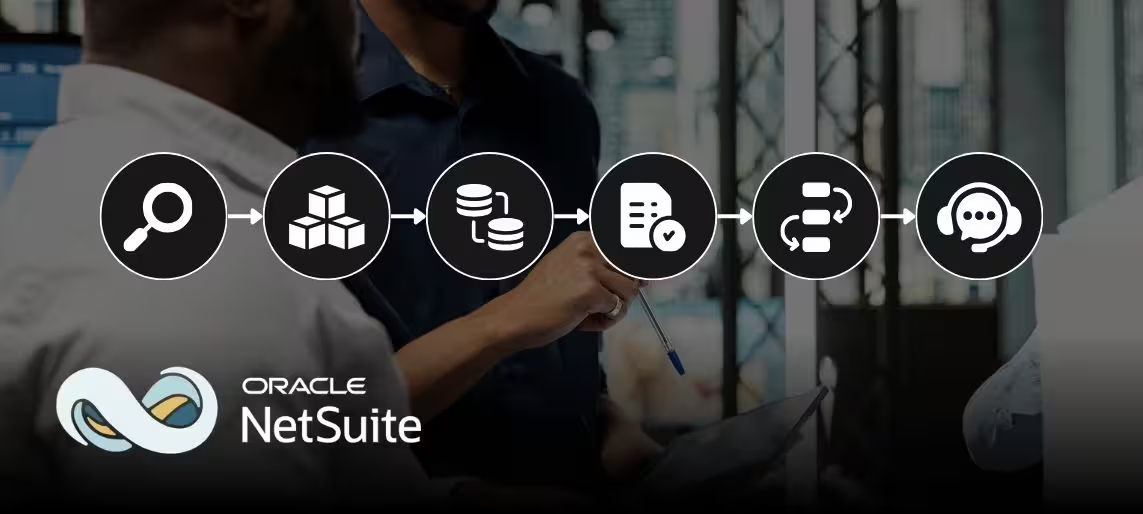
A NetSuite implementation moves through six phases: discovery and planning, design and configuration, data migration, testing and user acceptance, cutover and go-live, and post-go-live support. Every implementation follows this same structure, whether it takes ten weeks or ten months. Knowing the NetSuite implementation phases in advance is what lets you plan realistically instead of reacting as each one starts. This page is a quick reference for what happens in each phase, the deliverable that closes it out, and the mistake that most often extends it. For duration estimates by company size, see our companion guide to the NetSuite implementation timeline. For a full task-by-task checklist with ownership built in, see our NetSuite implementation checklist.
The Six Phases at a Glance
- Discovery and Planning: mapping how the business actually operates today
- Design and Configuration: building NetSuite around that design
- Data Migration: moving and validating legacy data
- Testing and User Acceptance: proving the system works for real processes
- Cutover and Go-Live: the transition from legacy system to production
- Post-Go-Live Support: stabilizing the system after launch
Phase 1: Discovery and Planning
What it is: The phase where your team and implementation partner document current workflows across finance, operations, and sales, and define what success looks like before anyone touches a NetSuite setting.
Key deliverable: A requirements document and process map that both sides agree on before configuration starts.
Common pitfall: Treating discovery as a formality to get through quickly. Decisions skipped here get reopened during build and testing, at a much higher cost than settling them up front.
Phase 2: Design and Configuration
What it is: Translating the agreed design into a working NetSuite environment: chart of accounts, roles, workflows, and the configure-versus-customize decisions.
Key deliverable: A sandbox environment configured to match the design, ready for real data.
Common pitfall: Customizing before exhausting NetSuite's native configuration options, which adds cost now and maintenance burden after every future platform release.
Phase 3: Data Migration
What it is: Extracting, cleaning, mapping, and loading legacy data, usually across more than one test migration before the final cutover.
Key deliverable: A reconciled trial balance and validated records, not just data that's been imported.
Common pitfall: Assuming data quality without checking it. Dirty data discovered during testing costs far more to fix than data cleaned before extraction ever begins.
Phase 4: Testing and User Acceptance
What it is: The people who will use NetSuite daily validate that it supports real processes, including exceptions like returns, credit memos, and rejected approvals, not just standard transactions.
Key deliverable: A defined pass rate on test scripts, signed off by the business process owners, not just the implementation consultant.
Common pitfall: Testing only the happy path. Exception scenarios skipped in testing tend to surface in production instead, when they're far more expensive to fix.
Phase 5: Cutover and Go-Live
What it is: The final data load, access validation, and formal go or no-go decision that moves the business from the legacy system to NetSuite in production.
Key deliverable: A documented cutover plan with a named freeze date, sequenced steps, and signed approvers, distinct from the checklist that tracks readiness to get there.
Common pitfall: Launching during month-end, year-end, or a seasonal peak, which stacks go-live pressure on top of a business's busiest period.
Phase 6: Post-Go-Live Support
What it is: The stabilization period, often called hypercare, when real usage surfaces the issues testing didn't catch.
Key deliverable: A closed list of open issues, reviewed against original scope, before support formally winds down.
Common pitfall: Letting hypercare fade out instead of formally closing it, which lets unresolved issues carry quietly into the months that follow.
Where to Go Next
Each phase raises its own questions once you're actually planning around it. For realistic durations by company size and complexity, see our guide to the NetSuite implementation timeline. For a task-by-task checklist with an owner and exit condition for every item, see our NetSuite implementation checklist. If you're budgeting the project, our breakdown of NetSuite implementation cost explains what drives the price in each phase. And if you're deciding whether to run these phases with a partner, our guide to choosing a NetSuite implementation partner covers what to evaluate before you sign.
PARA Consulting runs every phase around discovery before configuration, which is the single biggest factor in whether a NetSuite implementation stays on schedule. Talk through your implementation with our team before you scope a project plan.